


There is a hidden roadside economy lying just inches beyond the white line, accessible almost exclusively to long-distance touring cyclists. Tapping into it requires riding remote, hostile corridors at a human-powered 12 mph, a pace slow enough to scan every foot of asphalt, on shoulders no recreational rider would touch.
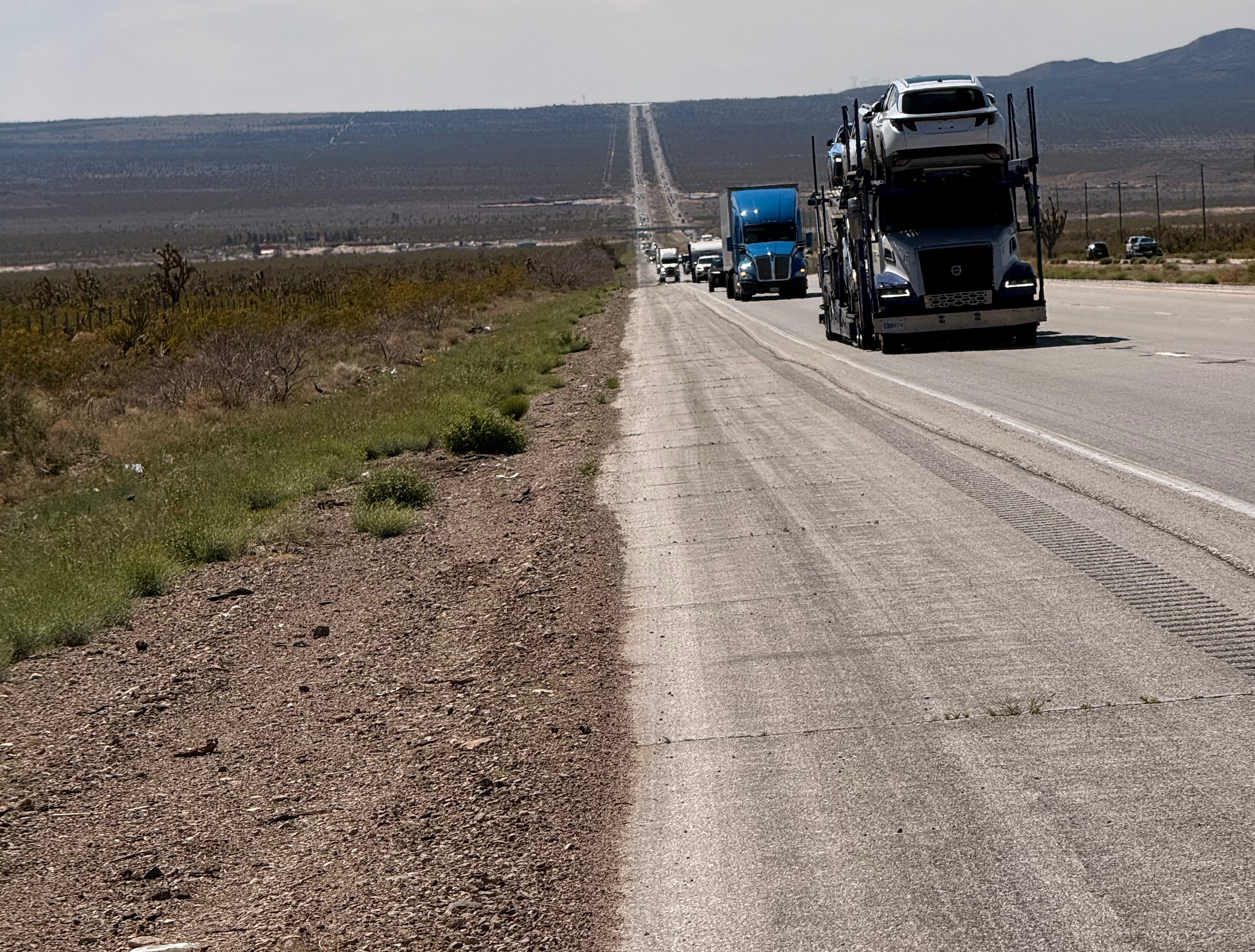
Pedaling a loaded bicycle across the Mojave Desert along Interstate 15 between Los Angeles and Las Vegas is less a bike ride and more a slow trip through a shimmering furnace. Yet in such sun-blasted stretches, where the heat turns your brain to warm porridge, the highway gutter yields its most extraordinary bounty.
Near the sun-baked outpost of Baker, I spotted a brown travel wallet in the dirt. At first glance it looked empty, but then I saw the desert wind driving a trail of credit cards and white paper slips into the sagebrush. What followed was a frantic, uncoordinated shuffle in cycling shoes as I scrambled to catch flying rectangles of plastic before they vanished toward Nevada. I stuffed the entire chaotic handful into my pannier and pedaled onward, unknowing if there were more to be found.
At my next shelter from the heat, a desolate spot called Midway, I unzipped the bag to inspect my salvage. Buried amidst the plastic was the crown jewel of the haul: three casino vouchers totaling $1,200.
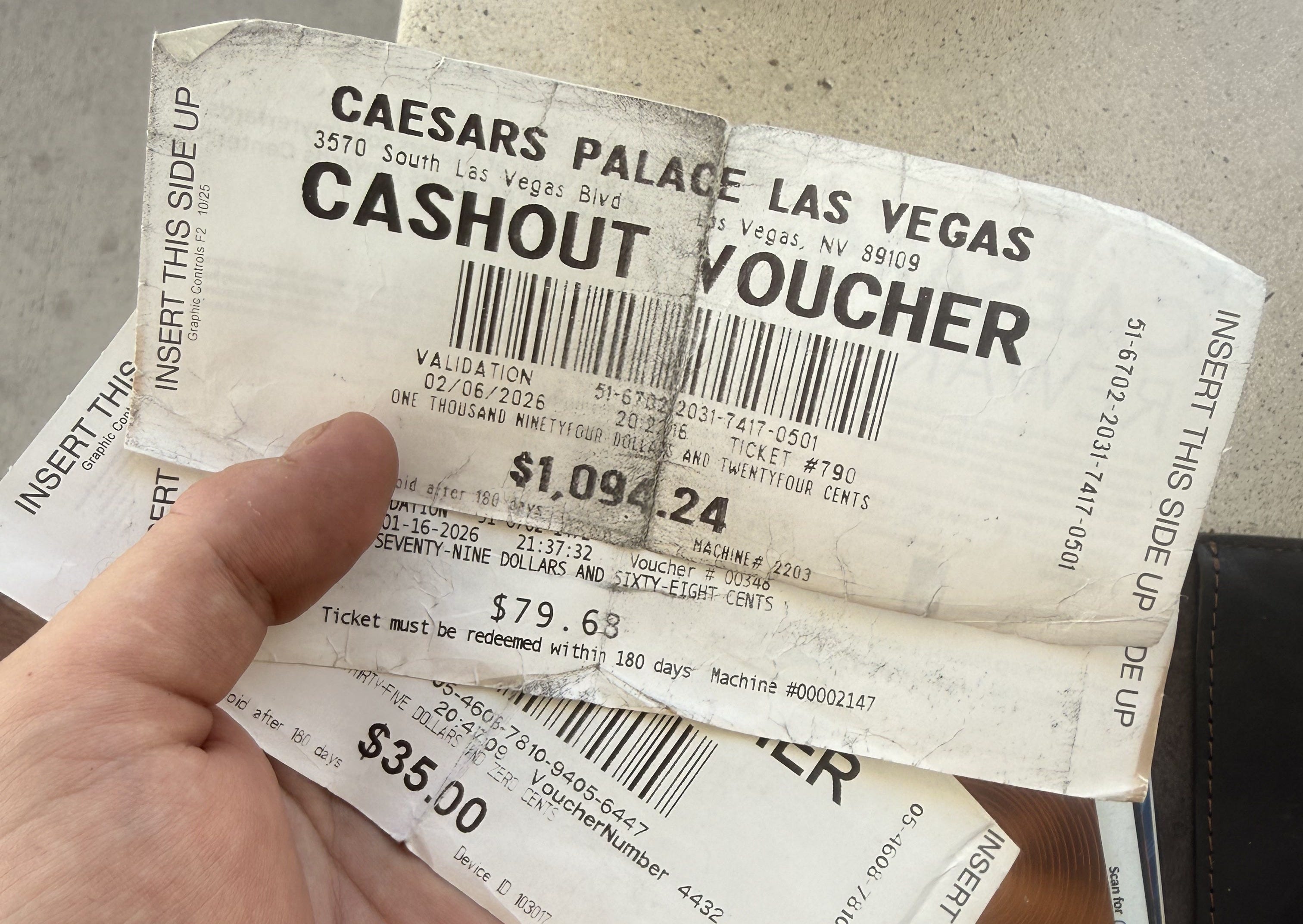
Reconnecting this fortune with its owner required some improvised detective work. The cards pointed to a businessman with accounts across Rancho Cucamonga, so I phoned the local Chamber of Commerce. Two minutes later my phone rang. It was the owner, practically weeping with relief. His true, transcendent joy stemmed from a single, glorious miracle: he had just been spared the soul-crushing nightmare of a morning at the California DMV.
In his delight, as well as offering me a free meal at one of his restaurants, he insisted I keep the $1,200 in casino vouchers as a reward for returning his cards, an offer I was only too happy to cash in once I pedaled into Las Vegas.
After handing the wallet over to the businessman’s friends who met me in Baker, the gods of the asphalt seemed determined to further reward my good deed. The following day brought an almost comical streak of roadside treasure.
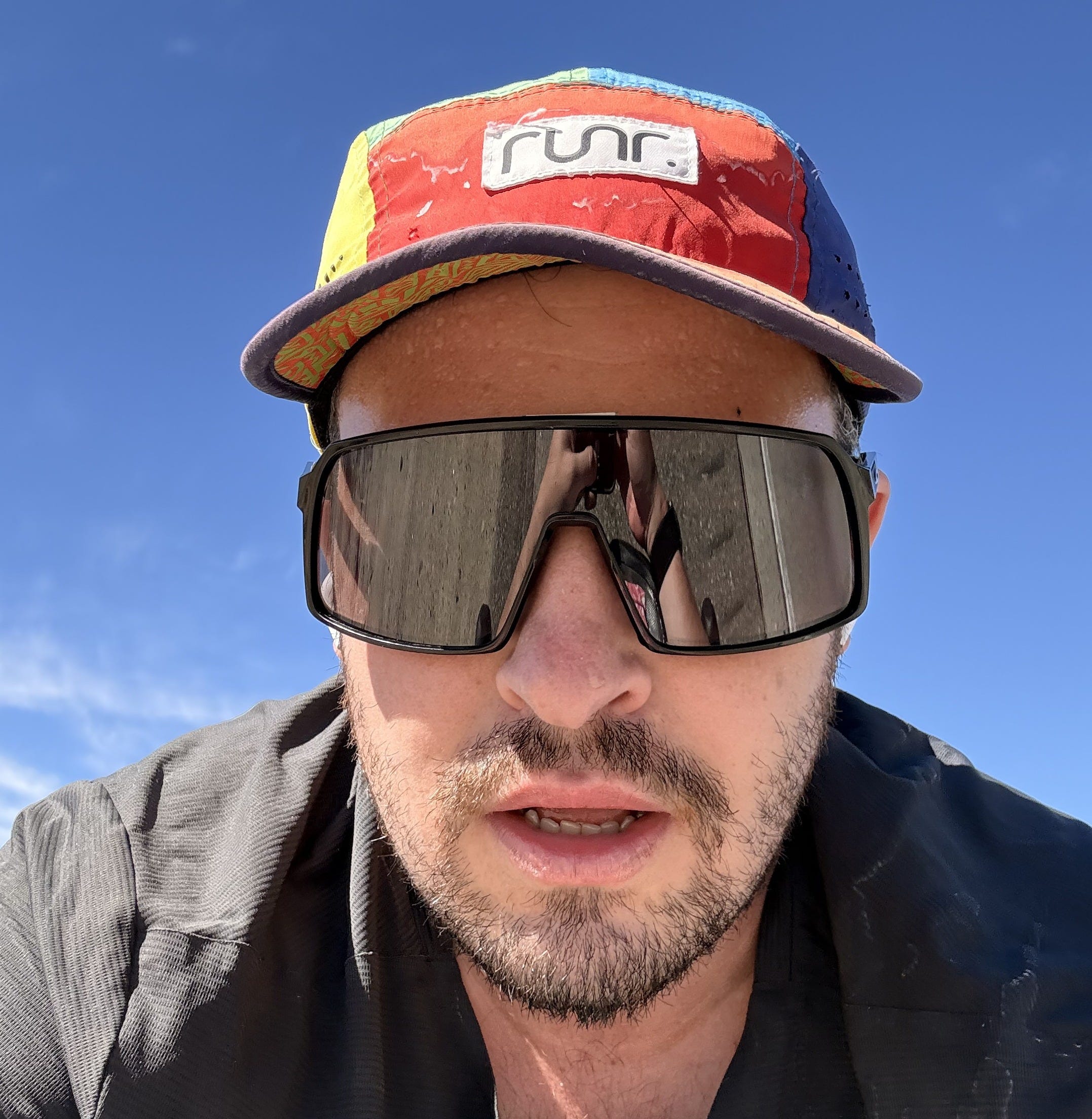
First came an iPhone 15, which I also managed to return to its owner. Next was a box of solar panel mounting rails worth $800, but far too enormous to strap to a bicycle. Then came a pair of $120 Oakley Sutro sunglasses in immaculate condition, looking as though they had bounced straight out of a shop display with scratch-free lenses and only a faint dusting of desert dirt.
Crossing into Nevada’s Clark County drops you into Primm, a surreal desert outpost that functions as one massive service station. It marks the exact line where gambling becomes legal, choking the border with garish casinos and petrol pumps, oh, and also a theme park with a roller coaster, because why the heck not.


Rolling through at 4 PM in oppressive heat, I pushed on, and within an hour, I pulled up alongside the single most bizarre find of the entire journey: a discarded revolver resting in the gravel.
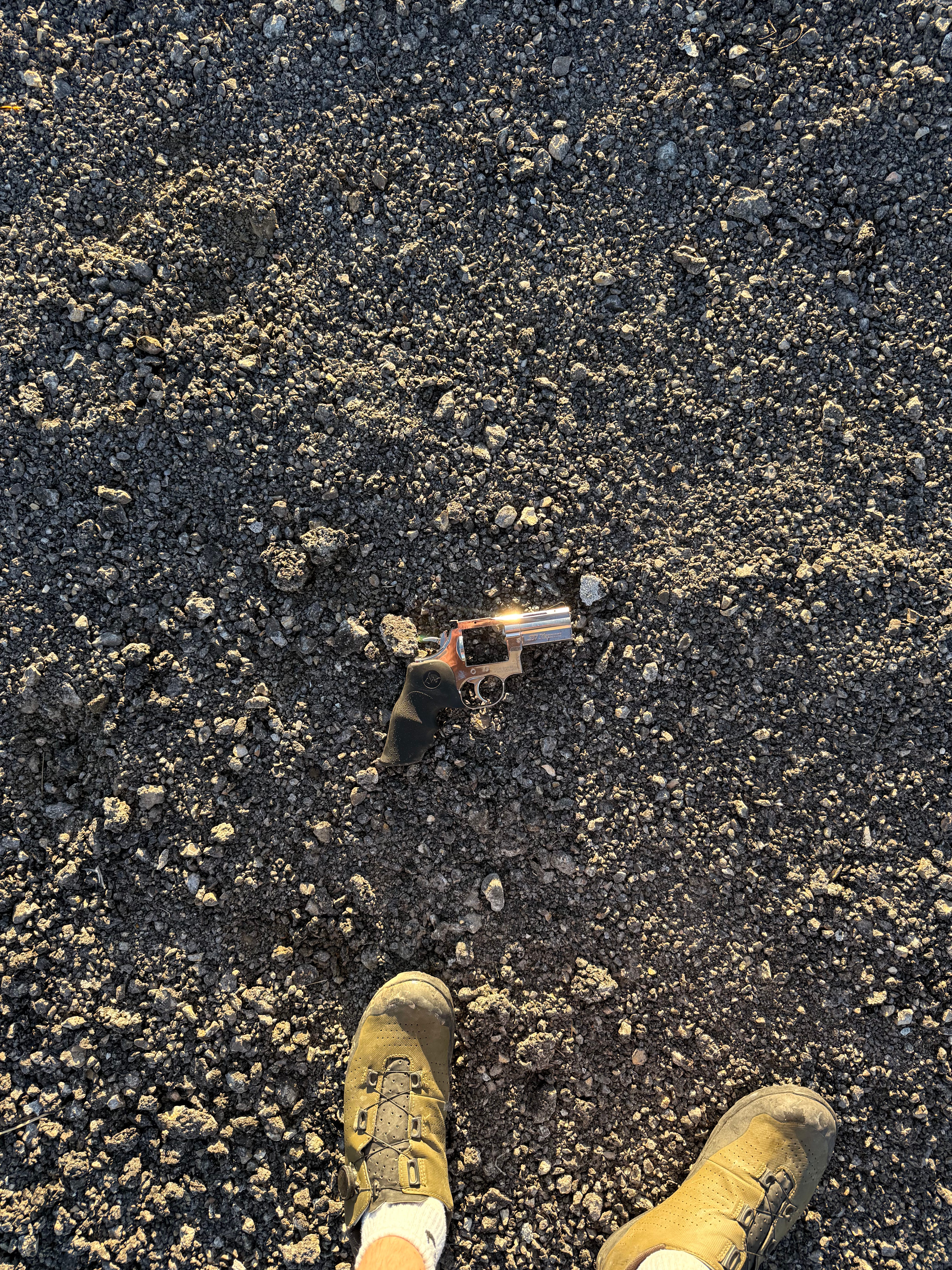
Using What3words to get the 3-word identifier (///islander.slumped.anchors), I called it into the local sheriff’s department, who arrived sometime later to bag it up and take it in for inspection. As a reward, the Jean County police invited me to sleep behind their station that night and sorted me out with food and goodies in the morning.
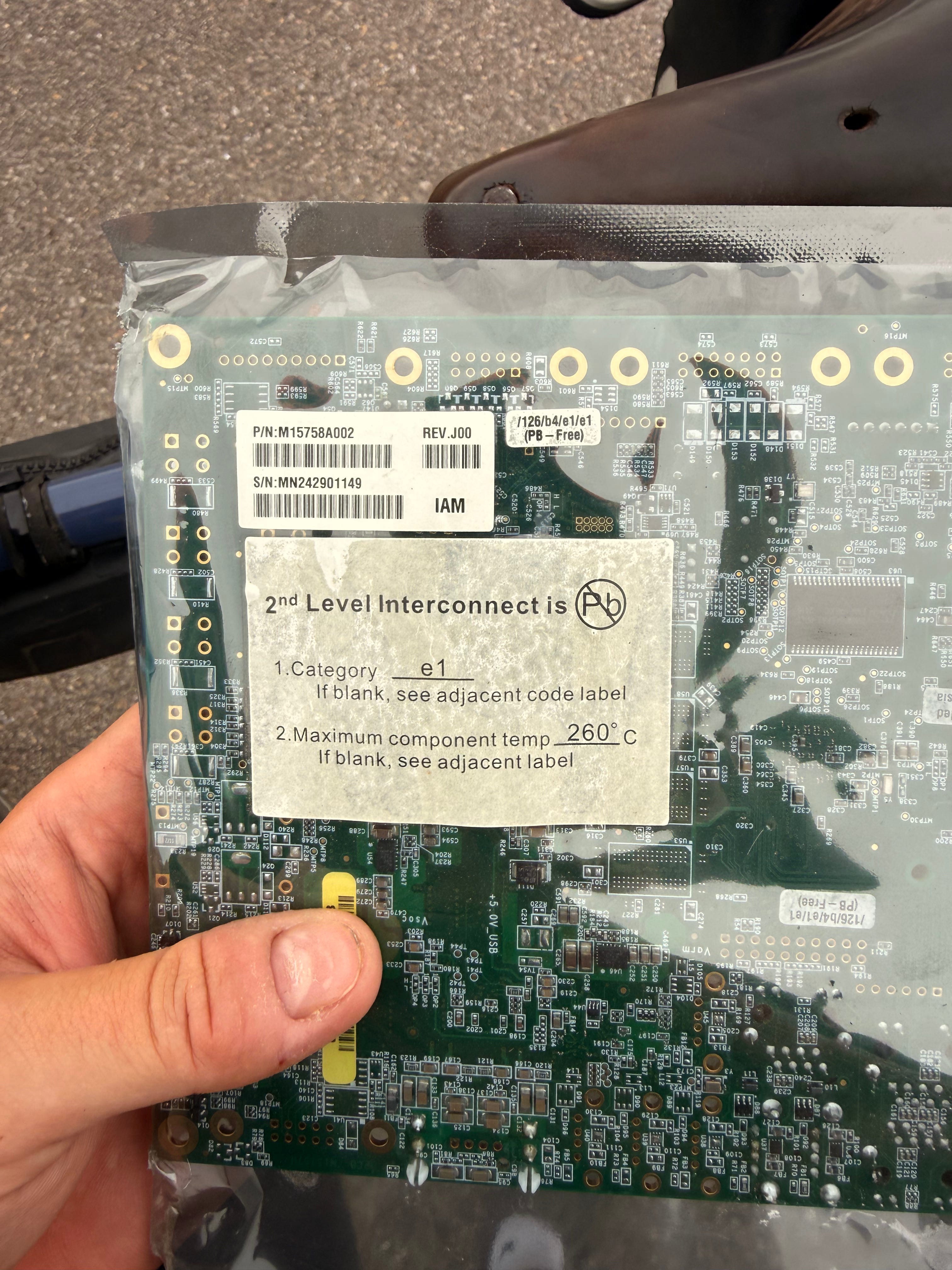
Pushing further east with the Las Vegas skyline fading in the distance, my next major haul had clearly tumbled straight off the back of a truck. It was a Gilbarco Omnia PCB board, the heavy-duty motherboard used to power an Encore 700S gas station dispenser, carrying a retail value of $2,499.
One of the great logistical triumphs of cycling across the United States, in contrast to somewhere like Kazakhstan, is the sheer density of post offices. You can pretty much count on finding one in every single town and tiny hamlet (including Rush, Colorado, which boasts a grand population of just six). This made it remarkably easy to keep bouncing salvage forward whenever I no longer wanted to haul it on two wheels. Given how valuable the PCB board was, I immediately boxed it up and shipped it off to a friend in Boston. Joined with the ten other parcels I had already posted ahead, it meant I could eventually fly home with my entire roadside harvest intact rather than risking it getting pulverized in my panniers.
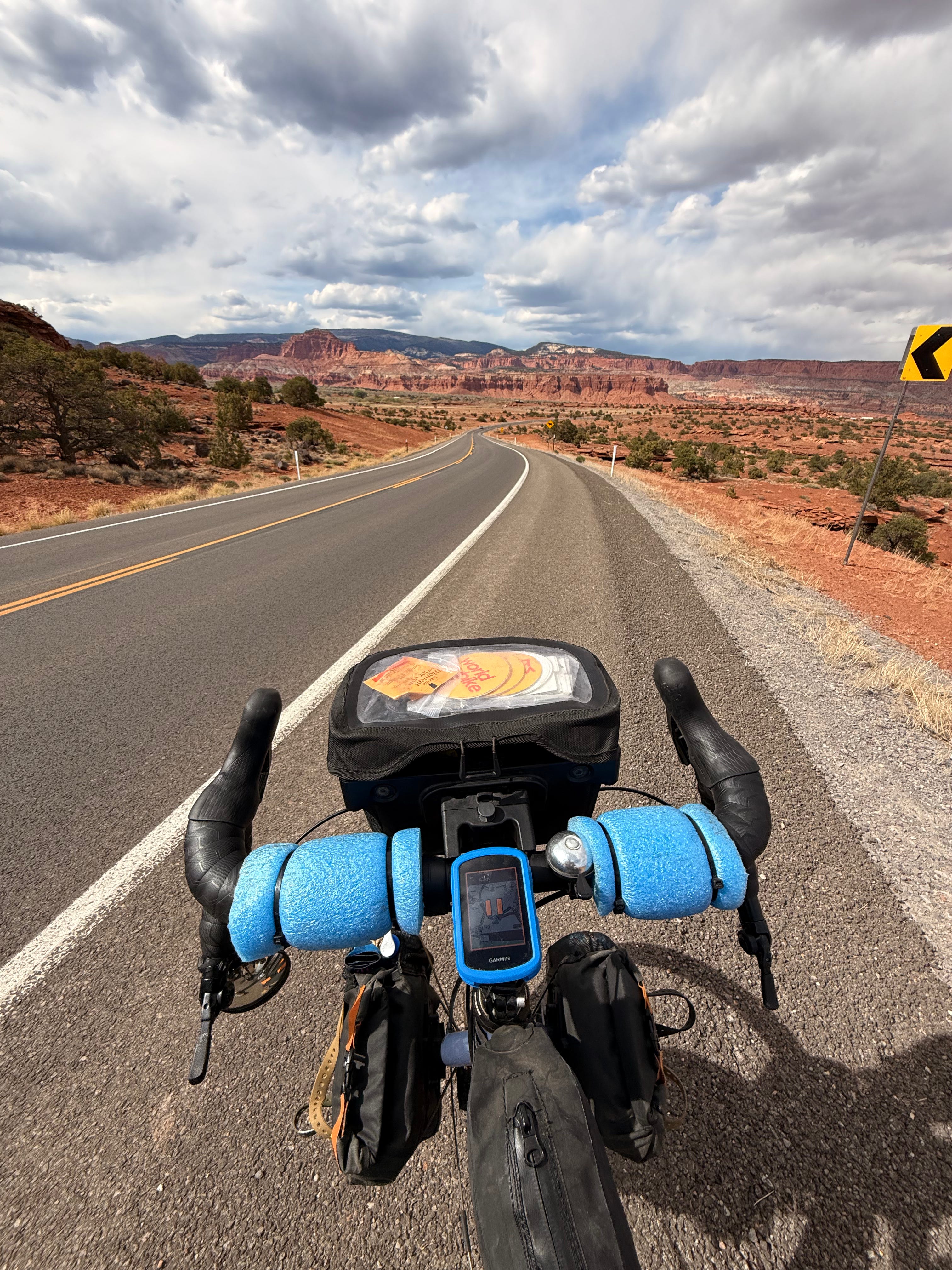
Beyond just shipping road finds forward, the post office network provided the perfect opportunity to be ruthlessly realistic about my own setup. I began shedding grams that quickly compounded into kilograms, eventually reaching the point where I questioned why I was even hauling rear panniers in the first place. Naturally, my commitment to ultra-light minimalism had its blind spots: I remained fiercely convinced I needed my new $120 Helinox chair, a luxury item I proceeded to use a grand total of two times between Las Vegas and Boston.


High in the mountains of Utah, around Otter Creek Reservoir, I stumbled across one of my absolute favorite roadside discoveries. It earned that status partly because of how easily I could have missed it, and partly because of its pristine condition. Blending seamlessly into the terrain, a Kuiu jacket lay hidden right in the scrub, looking as though it had bounced off the back of someone’s boat or truck bed only minutes earlier. Tucked into the landscape, I very nearly rode straight past without spotting it.
Beyond proving its immediate worth by keeping me warm during a stretch of freezing nights up in Gunnison, the jacket was in such flawless shape that I eventually sold it online for $300.


Riding the stretch between Green River, Utah and Grand Junction, Colorado, about sixty miles into the day, I noticed an unusual, deep ache setting into my neck and shoulders. It took a moment to figure out the culprit. The soreness was not from the mileage or the headwinds, but from the fact that I had spent the entire day riding with my head cocked at a permanent, diagonal tilt, hyper-focused on scanning the asphalt shoulder for potential loot.
The sore neck felt entirely justified, when I stumbled across several full boxes of Lay’s crisps, which I hastily crammed into my panniers to redistribute to fellow travelers and upcoming Warmshowers’ hosts along the way.


Some of my other notable road finds included:
1 x JBL Charge speaker, 12 x torches, 30+ live ammo bullets, shotgun shells, spent casings, arrowheads, and a couple of Nerf guns, 5 x Nalgene water bottles (including two I kept and used daily), 3 x pairs of AirPods, 1 iPad, 2 iPhones, 3 other phones, 18 x knives, including a 20-inch machete on the HW outside St. George, Utah, and a well-loved Leatherman, 9 x multitools, spanner sets, and full toolkits (including the exact spanner size required to tighten my loose mudguard), countless packs of wet wipes, tape measures, and other random hardware.
20,000+ mini liquor bottles providing a stark look at roadside drinking culture, along with hundreds of discarded vapes and nicotine pouch tins.


The Geography of Excess
There is a distinct, observable geography to the absurdities spilled onto American asphalt. In most parts of the world, where frugality is a hardwired instinct rather than a boutique lifestyle choice, the roadside economy is remarkably bleak. Pedal across Australia, for instance, and your most thrilling salvages might amount to a shattered, unidentifiable Android, an indestructible relic of a brick-style Nokia, or, if the cycling gods are wearing a benevolent grin, a couple of perfectly functional Voile straps.
America, however, operates on an entirely different economic plane. It is a culture of boundless hyper-consumption, and its highways act as an open-air graveyard of jettisoned wealth. The stretch leading out from California toward Las Vegas reads like a debris field of transient tourist excess: high-end sunglasses, dropped electronics, and misplaced luxury items rattled loose at seventy miles an hour.
Yet, as you push further east, the haul shifts alongside the landscape and the sheer, staggering dominance of the automobile. Across the flat, hypnotic plains running between Colorado and Illinois, the roadside economy dries up into a desert of monotony. Long-haul truckers barrel past with precious few reasons to pull over, leaving endless, barren miles of shoulder.
By the time you cross east of Chicago, the dynamic shifts again. In these higher-density, less recreationally inclined states, you find far fewer forgotten outdoor gadgets lying in the gravel. A denser population simply creates a higher scavenger-to-junk ratio; anything of remote value is snatched up long before a passing cyclist can spot it.
The result is a maddening cycle of feast or famine, where three days of utter barrenness are suddenly broken by an all-you-can-carry buffet of discarded property. I remain quietly proud that my submissions to @RideFinds on Instagram (the wallet, and the gun) still hold the crown as their two most popular posts of all time.
Having spent the preceding months enjoying a bargain-basement existence in Thailand, I had braced myself to be utterly ruined by American prices. Instead, I stumbled into a bizarre financial paradox. Between the staggering bounty salvaged from the shoulder (which I’ve gone onto sell), the incredible generosity of strangers, the refuge of Warmshowers hosts, and an unwavering commitment to wild camping (or voluntary homelessness, to give it its proper title), cycling across the United States proved laughably cheap. Looking back at the haul harvested from the hard shoulder, I was left with only one logical conclusion: financially speaking, could I really afford not to cycle across America?
Ben Clark


